

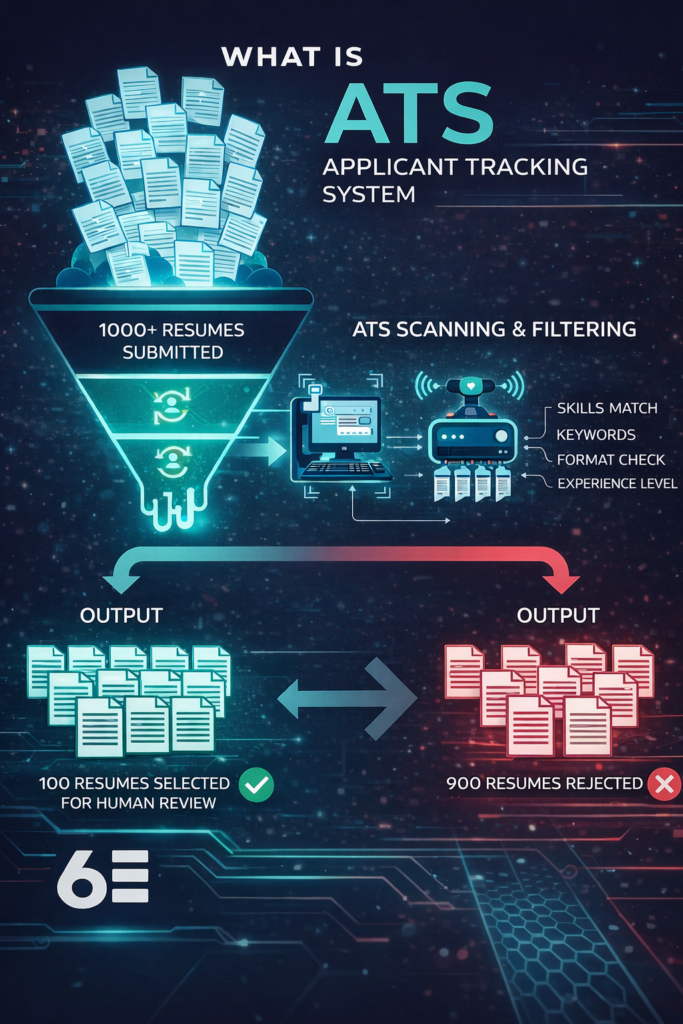
What is an Applicant Tracking System (ATS)?
Updated for 2026 with market data, vendor insights, and practical clarity for leaders and applicants.
An Applicant Tracking System (ATS) is not just another HR tool, it is the invisible infrastructure that governs who gets seen, when, and how. Yet few outside the recruiting function understand what an ATS actually is or how deeply it shapes hiring decisions across industries.
What Every Hiring Manager and Job Seeker Should Know
An Applicant Tracking System (ATS) is enterprise software that centralizes, automates, and governs the hiring process, from resume intake to compliance reporting. It is used by HR teams, recruitment departments, and hiring managers to manage high volumes of candidate data, enforce process consistency, and ensure legal compliance.
Far from a simple HR tool, ATS software has become core infrastructure for talent acquisition in large and mid‑sized organizations.
1. What Is an Applicant Tracking System (ATS)? Definition and Core Functions
An Applicant Tracking System (ATS) is a software platform that automates and structures the full recruitment lifecycle, simplifying processes that once required spreadsheets, emails, and manual tracking. For example, Workday frames its ATS as a full-stack solution that “helps teams manage job postings, sourcing, candidate evaluation, interviews, and offers in one place.”
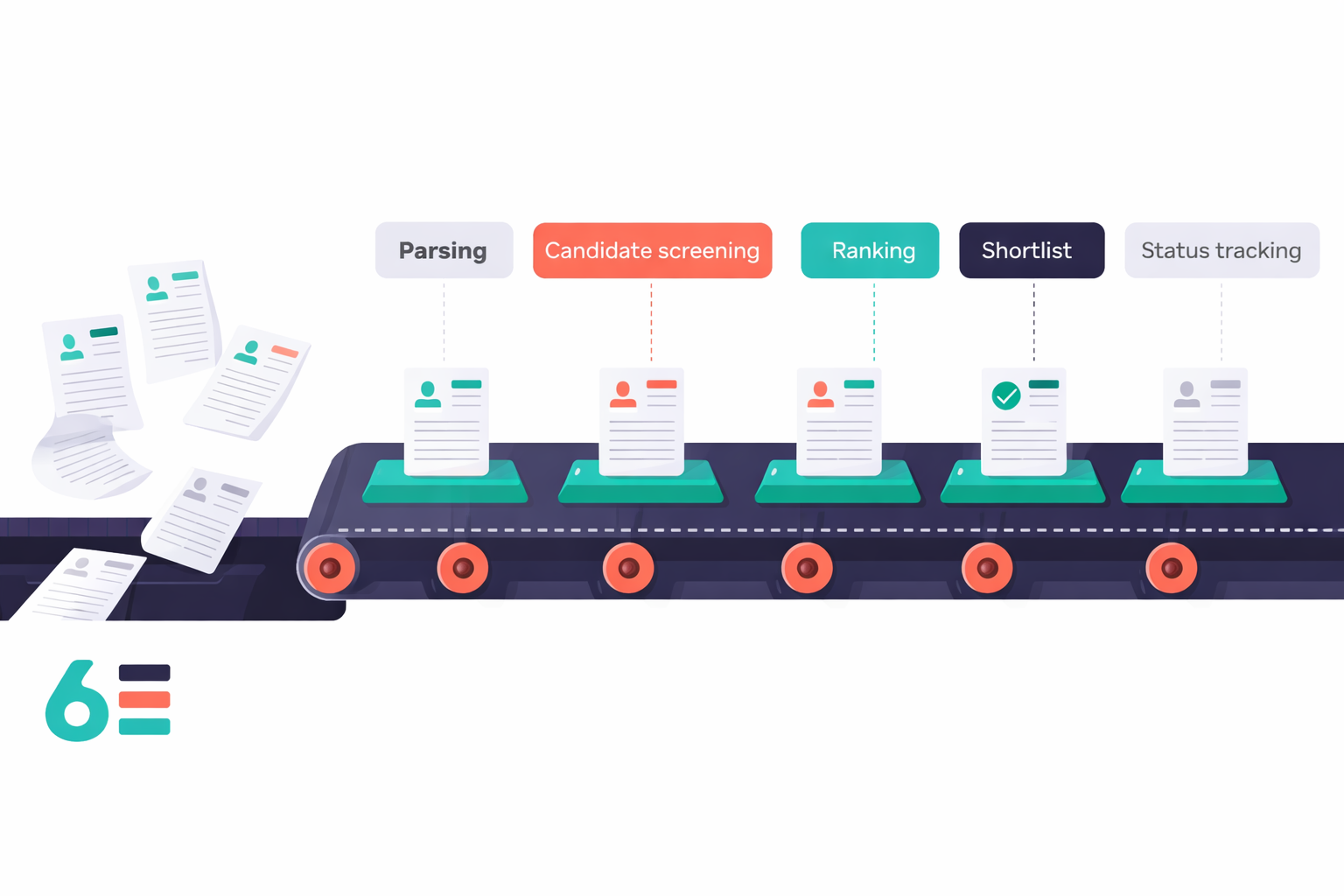
Key Functions of ATS Software
These are standard functions found in any modern ATS Software.
- Application Intake & Centralized Database
ATS solutions collect resumes, CVs, and candidate data from job boards, career portals, referrals, email applications, and external agencies into a single system of record, making data accessible and searchable. - Automated Workflow Management
An ATS structures hiring pipelines, including screening, interviews, offers, and rejections, so every role follows a consistent process with clear accountability. And From Workday’s own definitions of ATS:
“Throughout the hiring process, the ATS tracks where each candidate stands… [and] automates screening and streamlines workflows to improve the entire recruiting process.” - Resume Parsing & Candidate Screening
According to Workday’s recruiting documentation, ATS platforms use parsing engines to extract structured information (such as education, skills, and employment history) from uploaded resumes and organize that data into searchable candidate profiles. Then rank or filter applicants based on configured criteria. This helps recruiters focus on the most relevant candidates. SAP SuccessFactors documentation explicitly describes resume parsing as a feature, too:
“Set up the resume parsing function, which reads information from candidates’ resumes and automatically enters it in the corresponding candidate profile fields.” - Compliance, Data Privacy, and Reporting
ATS systems maintain audit trails, track consent, and support reporting required under employment law, GDPR, and other regional regulations. A major reason enterprises adopt these platforms.
2. How ATS Software Works in Recruiting, From Intake to Offer
To non‑HR leaders, ATS behavior can seem opaque. But understanding its mechanics helps demystify hiring outcomes.
Step 1: Resume Parsing & Structured Profiles
ATS algorithms break down resumes into standardized fields so the system can compare candidates:** name, skills, experience, education, certifications, and keywords**.
Step 2: Automated Candidate Screening
Configured filters and relevance logic prioritize applicants who best match job descriptions. This reduces recruiter workload and accelerates time‑to‑hire.
According to Jobscan and multiple recruiting benchmarks, only about 2–5% of applicants typically make it to the interview stage, a rate often dictated by the ATS filters.
Step 3: Workflow & Status Tracking
Once in the system, candidates are tracked through structured hiring stages with audit records, invaluable for compliance and reporting.
Step 4: Analytics & Forecasting
Enterprise ATS platforms provide dashboards for recruiter efficiency, pipeline health, diversity metrics, and more.
By centralizing hiring data in this way, organizations eliminate fragmented spreadsheets and reduce manual administrative work.
3. Applicant Tracking System (ATS) Market Size, Growth & Adoption Trends (2024–2030)
ATS adoption is expanding with clear industry growth patterns.
Market Growth
- The global ATS market is projected to grow from USD 3.28 billion in 2025 to USD 4.88 billion by 2030 at a compound annual growth rate (CAGR) of ~8.2%.
- This growth reflects rising demand for automation, compliance features, and improved candidate experience.
Global Adoption
- Around 73% of organizations report using an ATS as a core recruitment tool.
- Cloud‑based ATS deployments are increasing, driven by remote work and distributed teams.
These growth figures show that ATS has become a standard investment in enterprise talent acquisition.
4. Vendor Landscape and Market Share
The market is diverse, with different vendors dominating various segments of recruitment:
Top ATS Players Worldwide
According to recent industry reports, major vendors include:
- iCIMS, #1 ATS by global market share, used widely in enterprise hiring.
- Oracle Taleo
- Workday Recruiting
- SAP SuccessFactors
- Greenhouse Software
- Lever and Jobvite
Market Leadership Insights
- Workday Recruiting is heavily used in large corporations (39% of Fortune 500 companies’ talent acquisition platforms), followed by SAP SuccessFactors.
- Mid‑market and tech firms are also adopting ATS platforms such as Greenhouse, Lever, and Ashby, reflecting a shift toward more flexible, user‑centric solutions.
5. Why ATS Became Ubiquitous: Efficiency, Volume, and Compliance
ATS systems didn’t become widespread by accident. Three structural forces drove their adoption:
1. High Candidate Volumes
Many job postings attract hundreds or thousands of applications and manual processing is simply infeasible at scale.
2. Regulatory & Compliance Requirements
Enterprises use ATS platforms to maintain records that withstand auditing and comply with GDPR, EEO reporting, and local labor law.
3. Enterprise HR Tech Consolidation
Large Human Capital Management (HCM) suites from legacy vendors bundle ATS modules into broader HR ecosystems.
iCIMS emphasizes data integration, noting its ATS “integrates with most HCM or payroll providers… making activities like onboarding and reporting more efficient.”
Because of this, ATS is often seen not as a standalone HR tool, but as enterprise infrastructure that shapes who gets seen and who moves forward in the hiring process.
6. ATS Compliance and Data Privacy: the Legal Impacts Every Leader Should Know
GDPR and Candidate Rights
Under the EU GDPR:
- Candidates have the right to understand how automated systems use their data.
- Consent and data access must be manageably auditable.
ATS platforms can support GDPR compliance through consent tracking and privacy controls when configured properly.
Legal Accountability
For compliance officers and COOs, ATS platforms are major levers of risk management; documentation, retention policies, and logs protect employers in audits and investigations.
7. Real Impact: the Benefits and Limitations of ATS Software
Benefits for Employers
✔️ Speeds up screening and time‑to‑hire
✔️ Reduces manual administrative work
✔️ Improves recruiter productivity
✔️ Centralizes compliance reporting
Benefits for Candidates
✔️ Faster acknowledgement and status updates
✔️ Structured application tracking
✔️ Better alignment of expectations when ATS portals offer feedback
Limitations to Be Aware Of
❗ Over‑reliance on keyword matching can overlook qualified candidates
❗ Language nuances (especially in non‑English markets) may reduce parsing accuracy
❗ Default filters can unintentionally bias outcomes
Understanding these limitations is essential for recruiters and hiring leaders to improve configurations and candidate experience.
8. Future of ATS: AI, Automation & Better Candidate Experience
ATS platforms are increasingly adopting AI‑driven capabilities:
- AI parsing and relevance ranking
- Natural language understanding for job‑match scoring
- Predictive analytics for talent pipelines
Academic research shows that advanced machine learning models can significantly improve resume interpretation and semantic matching and efforts continue to make these systems more explainable and transparent.
Conclusion: ATS Is a System, Not a Solution
While Applicant Tracking Systems have become standard infrastructure in recruitment, they are not a substitute for human judgment. ATS platforms optimize for efficiency, not understanding. They cannot “read” humans, assess potential, or interpret nuance and their reliance on rigid parsing and keyword filters often leads to qualified candidates being overlooked.
These systems were designed to manage volume, not value. And when misused or left unmoderated they can exacerbate bias, damage candidate experience, and introduce serious compliance risks, especially in regulated markets like the EU.
The widespread adoption of ATS has introduced new pain points for employers and job seekers alike from opaque rejection logic and GDPR violations, to depersonalized hiring experiences that erode trust and reputation.
It’s time to treat the ATS not as a gatekeeper, but as a tool. One that must be governed, configured, and balanced with meaningful human oversight.
References & Sources
- Workday. What is an Applicant Tracking System? | Workday US
- SAP SuccessFactors Recruiting. Configuring Resume Parsing | SAP Help Portal
- iCMS. Your complete guide to applicant tracking systems | iCIMS
- Jobscan. “Which ATS Do Fortune 500 Companies Use?” (2025)
https://www.jobscan.co/blog/fortune-500-use-applicant-tracking-systems - Harvard Business Review. “How AI Assessment Tools Affect Job Candidates’ Behavior” (2025)
https://hbr.org/2025/07/how-ai-assessment-tools-affect-job-candidates-behavior - Gartner. “HR Technology Survey: Recruiting Systems and Candidate Experience Trends” (2025)
https://cvviz.com/blog/recruitment-software-benefits-gives-edge - Strategic Market Research. “Applicant Tracking System Market Size Report (2025–2030)”
https://www.strategicmarketresearch.com/market-report/applicant-tracking-system-market - Finance Yahoo. “Applicant Tracking System Market Outlook 2025–2030”
https://finance.yahoo.com/news/applicant-tracking-system-market-outlook-134100390.html - Everest Group. “The Rise of Mid-Market Recruitment Tech” (2025)
https://www.everestgrp.com/blog/the-rise-of-mid-market-recruitment-tech - MokaHR. “How ATS Supports GDPR Compliance in Hiring” (2025)
https://www.mokahr.io/myblog/applicant-tracking-system-gdpr-compliance - Klearskill. “How ATS Parsing Works in Resume Screening”
https://www.klearskill.com/blog-post/hr-applicant-tracking - Top Rank Listed. “ATS in HR: What You Need to Know”
https://topranklisted.com/blog/what-is-application-tracking-software-ats - ArXiv. “Improving Resume Semantic Matching with AI” (2025)
https://arxiv.org/abs/2511.02537