
Recruitment Trends and Challenges in 2025: The LinkedIn Illusion and the AI Hiring Bubble
Recruitment across the Baltics and Nordics in 2025 is showing its fault lines. Conversations with talent acquisition teams, hiring managers, and referrers across the region, combined with the July 2025 research report, reveal the same pattern: too much tech, too little clarity, and a hiring system buckling under its own complexity.
Why this matters
Hiring teams, candidates, and referrers feel the pressure from overloaded processes. Throughout the report, you’ll see where the system slows down and why.
What the interviews revealed
Conversations with talent teams, hiring managers, and referrers across the region point to the same theme: recruitment has become harder, not easier. AI tools misfire. Channels are saturated. Coordination is slow. Expectations and reality drift apart.
1. The AI Recruitment Bubble: Expectations vs. Reality
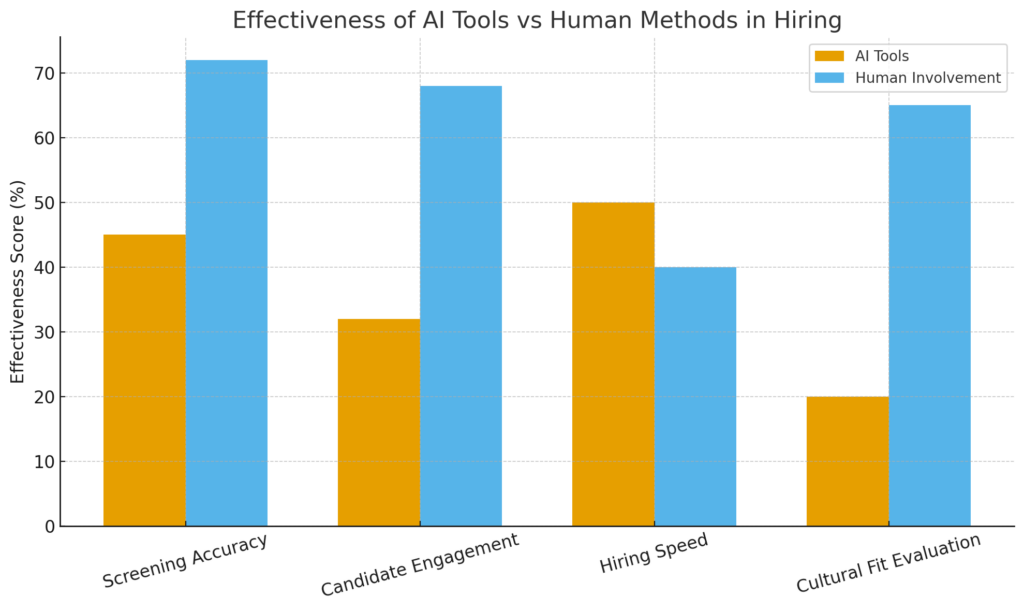
AI was sold as the fix that would make hiring faster and smarter. Instead, it’s often amplifying old problems while creating new ones.
What the data shows:
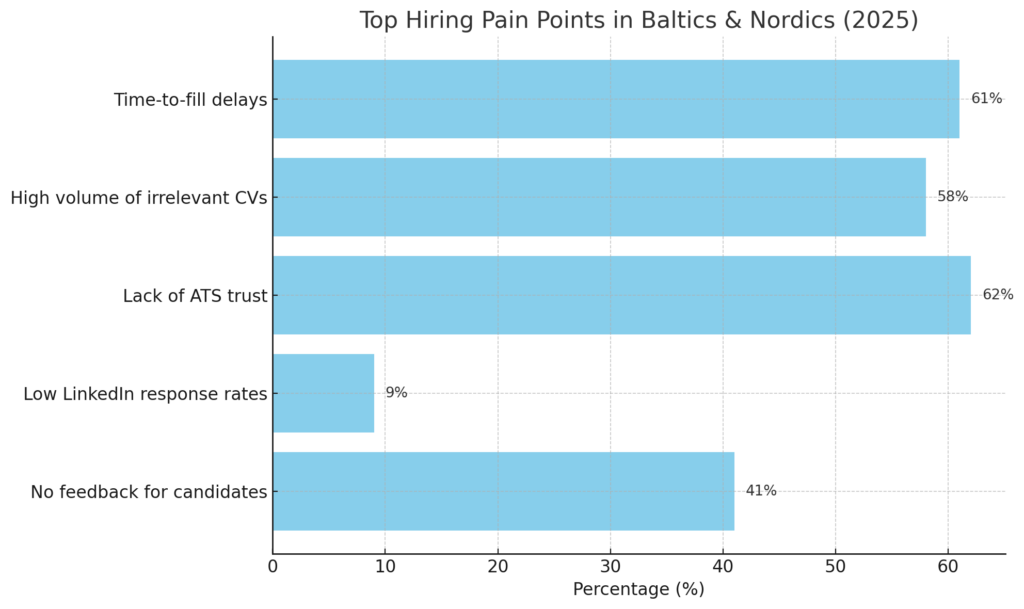
- 62% of companies struggle to fill IT and senior-level roles (July 2025 Report)
- 61% of employers cite time-to-fill as their #1 pain point (Gartner EMEA Talent Tech Pulse 2025)
- Parsing failures, bias, language mismatch, and rejection automation continue to plague AI-powered ATS tools
- Candidates actively game ATS using keyword-loaded CVs and AI tools to bypass screening
The result is a widening gap between what AI promises and what it delivers and a growing frustration on both sides of the process.
2. The LinkedIn Illusion: Oversaturation and Low Yield
LinkedIn continues to be used heavily, but it’s simply become louder and less effective.
What teams report:
- InMail response rates in Europe have dropped below 9%.
- Cold outreach rarely works unless warmed by a mutual contact.
- Candidates increasingly treat LinkedIn outreach as background noise.
LinkedIn still matters, but expecting it to carry your hiring strategy is becoming unrealistic.
3. Recruiters and Hiring Managers Are Drowning
Instead of reducing workload, technology has shifted it into new, time-consuming forms.
Common experiences:
- Recruiters regularly juggle six or more roles at once.
- Many still manually sort through 500+ CVs per vacancy.
- ATS systems lack collaboration tools, so teams fall back to spreadsheets.
- Coordination and scheduling remain major bottlenecks.
The tools were meant to streamline the process. In reality, people are compensating for their shortcomings.
Visual: Top Hiring Pain Points in Baltics & Nordics
4. Candidates Are Disillusioned
While this report didn’t directly interview candidates, regional sentiment data makes the trend clear.
Growing concerns:
- 41% of candidates believe their application is never seen by a human.
- Automated rejections and the absence of feedback erode trust.
Candidates aren’t disengaging because they don’t care. They’re disengaging because the system feels opaque, one-sided, and increasingly automated.
5. Job Boards Deliver Volume, Not Quality
Job boards still generate large numbers of applicants. Just not the right ones.
What the numbers say:
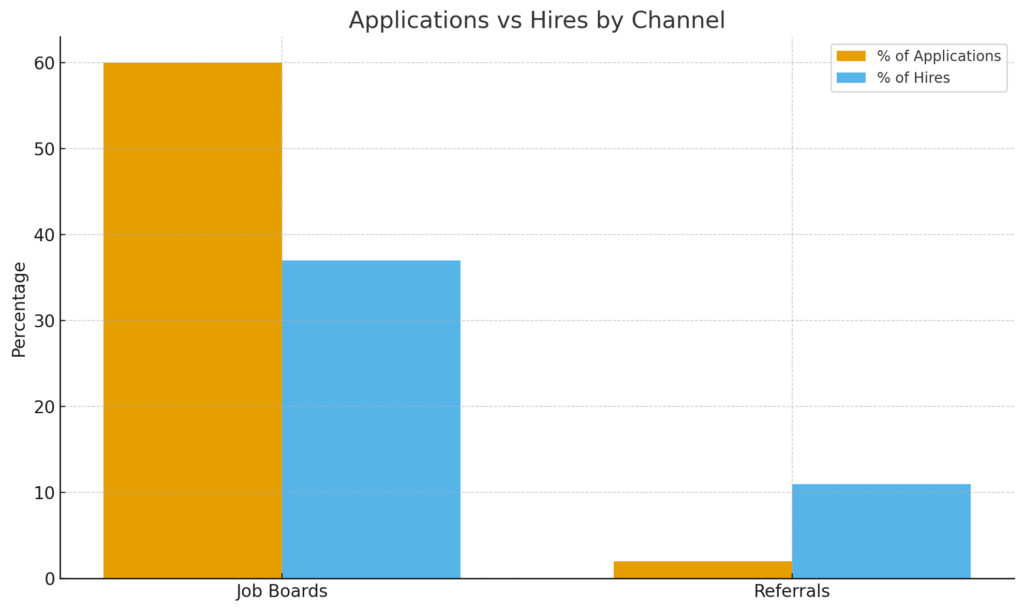
- 60% of applications come via job boards, but only 37% of hires result (Civitta / Google Baltics 2024)
- Startups use boards to signal “we’re hiring,” but most hires come from direct sourcing or networks
Boards create visibility, not necessarily viable candidates.
Visual: Applications vs Hires by Channel
6. Market Gaps and Systemic Misalignment
Across interviews and research, the same structural issues appear again and again.
Key gaps:
- Tools increase friction rather than clarity.
- Feedback loops are broken: candidates rarely receive feedback, and hiring teams rarely receive structured post-hire insights.
- Salary expectations often miss the market reality.
- Referrals perform exceptionally well, but employer networks and personal networks exhaust quickly, leaving no mechanism to scale them.
The system isn’t just inefficient. It’s misaligned with how people actually work and how talent actually moves.
Visual: AI vs Human Methods in Hiring
Conclusion: Scale Amplifies Dysfunction
Companies have more hiring tools than ever, yet the experience of hiring and being hired is deteriorating. Growing number of teams in the Baltics and Nordics are running into the same paradox: the more tools they add, the more complex, depersonalized, and inefficient the process becomes.
This report captures the signals that matter and the patterns that shape the region’s hiring reality in 2025. Not just the symptoms but the underlying structural issues.
All statistics are sourced from the July 2025 “Recruitment in the Baltics & Nordics” report, Gartner, McKinsey, BCG, Civitta, and the EU Talent Trust Index. Interviews were conducted May–June 2025 with talent acquisition teams, hiring managers, and referrers across the Baltics and Nordics.